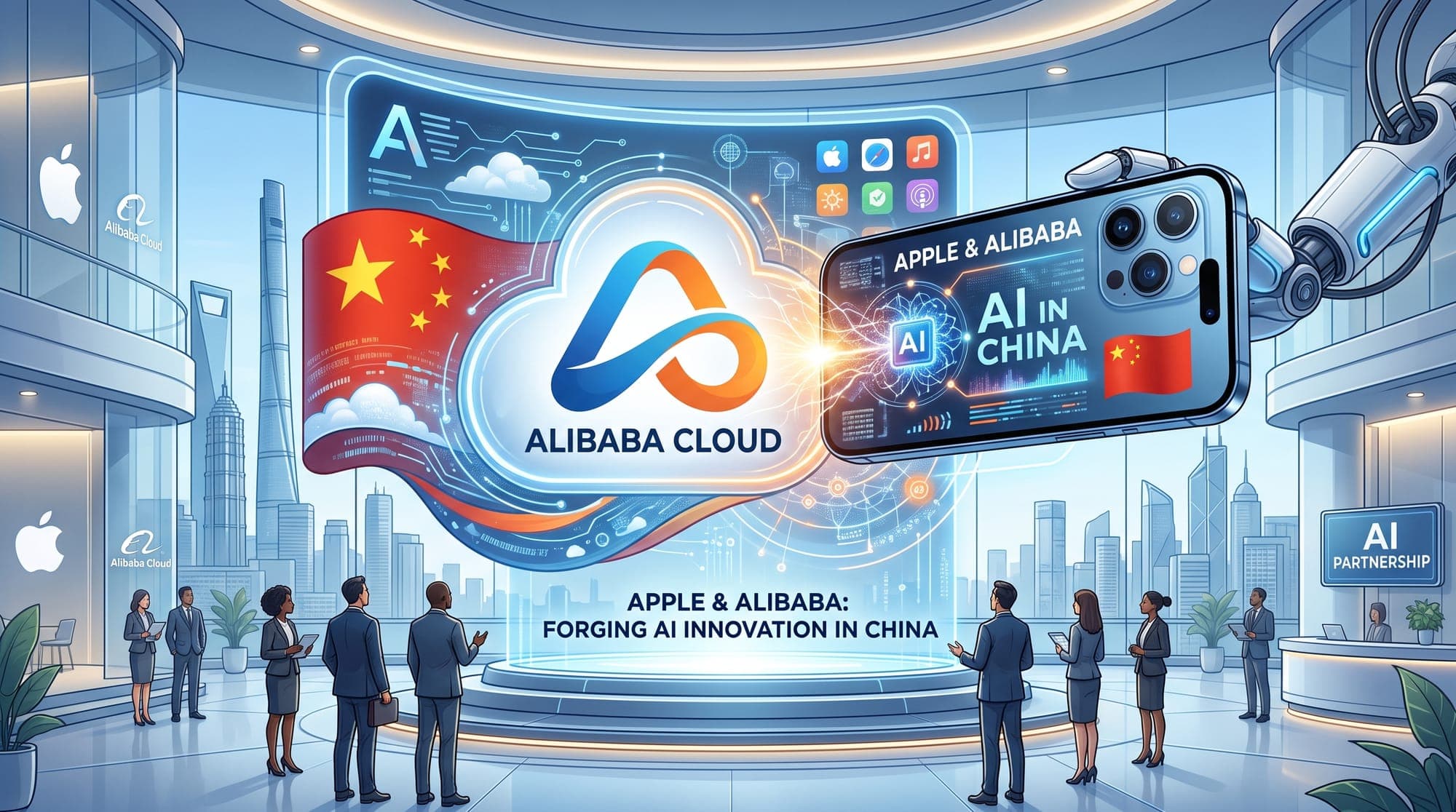
Apple has developed a custom large language model specifically for the Chinese market in partnership with Alibaba, marking a rare U.S.-China AI collaboration that gives Apple more control over its AI features in a key market where it has been losing ground to domestic rivals.
According to Reuters, citing three people familiar with the matter, Apple trained the China-specific model with Alibaba's support. This departs from Apple's previous strategy of relying on third-party Chinese models to power Apple Intelligence in the country, where U.S. models like OpenAI's ChatGPT and Anthropic's Claude are not available.
A strategic shift for Apple in China

The move comes as Apple prepares to launch Apple Intelligence in China in the coming months following an iOS update. Last month, China's Cyberspace Administration registered Apple's generative AI service, clearing a major regulatory hurdle. The registration had initially specified that Alibaba's Qwen model would be incorporated into the Chinese version of Apple Intelligence, along with technology from Baidu.
Apple's self-trained model would make it the first foreign company approved by Beijing to offer a proprietary AI model in China, according to Reuters. The partnership with Alibaba was first confirmed in February 2025 when Alibaba chairman Joe Tsai said Apple chose to work with Alibaba after evaluating several Chinese companies.
China accounts for a significant share of Apple's revenue, and the absence of AI features on Chinese iPhones has been cited as a factor in declining sales as consumers gravitated toward domestic brands like Huawei that offer built-in AI assistants.
Regulatory landscape
It remains unclear what role Apple's proprietary model will play alongside third-party Chinese models. Last week, Apple published and then deleted a Chinese-language guide explaining how eligible Mac users in mainland China could connect Qwen to Siri and Writing Tools, a Mac-specific arrangement that could help it compete in China's AI PC market.
The development represents a unique dual-track strategy on AI deployment for a foreign firm in China, which would allow it to navigate steep regulatory hurdles that have limited access for many other U.S. technology firms. AI models must be registered with and cleared by the government in China before public release.
Sources
Reuters: Apple trains its own AI model for China market with Alibaba's support, sources say (August 14, 2026): https://www.reuters.com/business/retail-consumer/apple-trains-its-own-ai-model-china-market-with-alibabas-support-sources-say-2026-08-14/
The Verge: Apple trained its own AI model for China with help from Alibaba (August 14, 2026): https://www.theverge.com/ai-artificial-intelligence/980160/apple-intelligence-china-custom-ai-model-alibaba