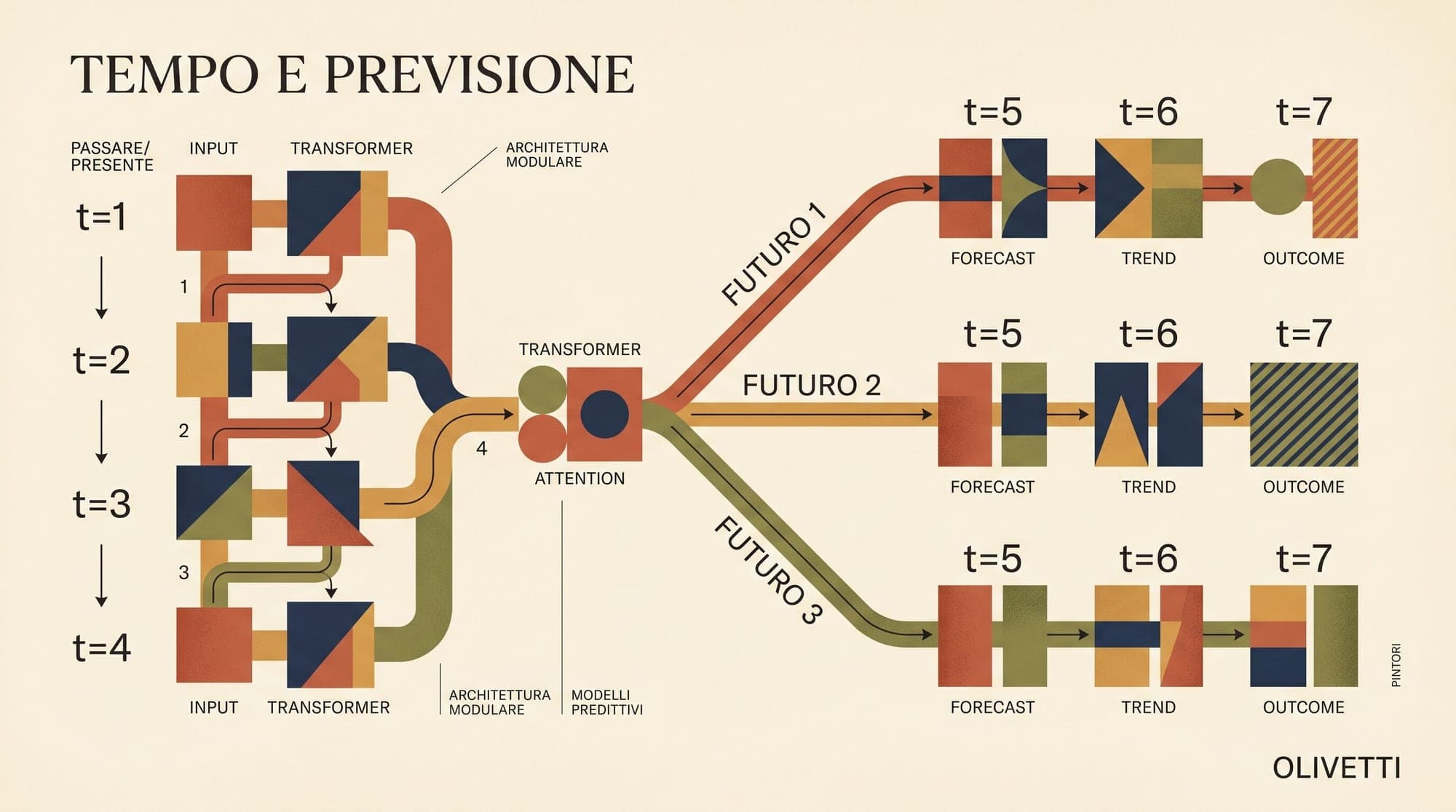
Anthropic in talks to buy Decart for $6 billion, targeting compute efficiency

Anthropic is in talks to acquire Israeli AI startup Decart for about $6 billion, according to people familiar with the matter cited by Bloomberg. The deal would be Anthropic's largest known acquisition and signals a strategic push to lower the cost of running its models at scale. Decart builds software that makes GPU compute more efficient — reducing the cost of training and operating AI models by helping chips work harder. For Anthropic, which just reported preliminary Q2 revenue above $11.5 b

2 min
Anthropic in talks to buy Decart for $6 billion, targeting compute efficiency

Anthropic is in talks to acquire Israeli AI startup Decart for about $6 billion, according to people familiar with the matter cited by Bloomberg. The deal would be Anthropic's largest known acquisition and signals a strategic push to lower the cost of running its models at scale.

Decart builds software that makes GPU compute more efficient — reducing the cost of training and operating AI models by helping chips work harder. For Anthropic, which just reported preliminary Q2 revenue above $11.5 billion (more than 14x year-over-year), the acquisition targets a direct bottleneck: surging demand for Claude Code and API usage is pressing against compute capacity.

The compute efficiency play

The talks come as Anthropic courts investors ahead of a potential IPO. Bloomberg reported the company showed positive adjusted operating income in Q2, a notable milestone for a lab that has burned heavily on compute and talent. Decart's optimization layer would let Anthropic serve more inference demand on its existing infrastructure, improving unit economics at a time when enterprise adoption of coding agents is compounding.

Decart was founded by researchers from the Technion and Hebrew University. Its technology focuses on kernel-level GPU optimization and memory management — the plumbing that determines how much useful work each dollar of compute buys. In a market where frontier labs spend billions on data centers, a 10-20% efficiency gain compounds to hundreds of millions in savings.

Why now

The $6 billion valuation reflects both the strategic scarcity of compute-efficiency IP and Anthropic's urgency. OpenAI, Google, and xAI are all racing to lower inference costs. Anthropic's approach — buying the optimization layer rather than building it — mirrors its recent revenue trajectory: move fast, spend heavily, compound the advantage.

Sources

Bloomberg: Anthropic in Talks to Buy AI Startup Decart for $6 Billion (Aug 13, 2026) — https://www.bloomberg.com/news/articles/2026-08-13/anthropic-said-in-talks-to-buy-ai-startup-decart-for-6-billion

Bloomberg: Anthropic Revenue Surges To Over 11.5 Billion In Second Quarter (Aug 14, 2026) — https://www.bloomberg.com/news/articles/2026-08-14/anthropic-revenue-ahead-of-ipo-surges-over-14-fold-in-second-quarter

Written by

More to read

  • Sharpness-Aware Minimization in Large Language Models: How Adversarial Weight Perturbations and Flat Minima Boost Generalization

    In overparameterized deep neural networks, minimizing empirical training loss is insufficient to guarantee optimal generalization on unseen distributions. Modern deep architectures, including vision models and autoregressive Large Language Models (LLMs), operate in regimes where parameter counts far exceed training token counts, producing highly non-convex loss surfaces populated by infinite global minima. Standard optimization via Stochastic Gradient Descent (SGD) or AdamW often converges to sh

    1 min
  • Prefix-Tree KV Cache Management in Production: RadixAttention, Tree-Structured LRU Eviction, and Token-Level Sharing in SGLang and vLLM

    Prefix-Tree KV Cache Management in Production: RadixAttention, Tree-Structured LRU Eviction, and Token-Level Sharing in SGLang and vLLM Autoregressive large language model inference is heavily constrained by memory bandwidth and the computational overhead of the prefill phase. For workloads such as multi-turn conversations, autonomous agent tool loops, few-shot prompt evaluations, and tree-search decoding, consecutive requests often share substantial token prefixes. In a standard multi-turn ses

    1 min
  • Neural Collapse: How Simplex Equiangular Tight Frames Emerge at the Terminal Phase of Training

    In classification tasks, deep neural networks exhibit an unexpected geometric simplicity during late-stage optimization. While the internal activations of early training appear high-dimensional and complex, the penultimate layer representations and linear classifiers converge toward an exact, symmetrical geometric structure known as Neural Collapse (NC). First identified empirically by Papyan, Han, and Donoho (2020), Neural Collapse emerges during the Terminal Phase of Training (TPT). This regi

    1 min