AI Safety Firm Alice Raises 40M at Nearly B Valuation to Secure Models and Autonomous Agents

AI trust and security firm Alice has raised $140 million in a funding round led by Apax Digital, bringing its total capital raised to $280 million at a valuation approaching $1 billion. Strategic investors SentinelOne and Samsung Electronics participated in the round alongside MoreTech, Phoenix Financial, Maj Invest, and existing venture backers including Norwest Venture Partners, CRV, Highland Europe, Grove Ventures, Vintage Investment Partners, Resolute Ventures, NFX, and Claltech. The inves

2 min
AI Safety Firm Alice Raises 40M at Nearly B Valuation to Secure Models and Autonomous Agents

AI trust and security firm Alice has raised $140 million in a funding round led by Apax Digital, bringing its total capital raised to $280 million at a valuation approaching $1 billion.

Strategic investors SentinelOne and Samsung Electronics participated in the round alongside MoreTech, Phoenix Financial, Maj Invest, and existing venture backers including Norwest Venture Partners, CRV, Highland Europe, Grove Ventures, Vintage Investment Partners, Resolute Ventures, NFX, and Claltech.

The investment reflects growing enterprise demand for runtime defense layers and automated red-teaming infrastructure as organizations transition from text-only chatbots to autonomous agents with access to tools, databases, and execution environments.

Adversarial Testing and Runtime Guardrails

Founded as ActiveFence before rebranding, Alice leverages a proprietary repository of adversarial content and attack vectors, termed "Rabbit Hole," to evaluate and protect AI deployments. The company provides two primary operational capabilities:

  1. Pre-Deployment Red Teaming: Automated simulation suites that probe foundation models and agentic workflows for jailbreaks, prompt injections, compliance violations, and data exfiltration vectors.
  2. Runtime Policy Enforcement: Low-latency filtering layers that inspect bidirectional model inputs and outputs, enforcing safety policies, compliance bounds, and tool-call constraints in live production environments.
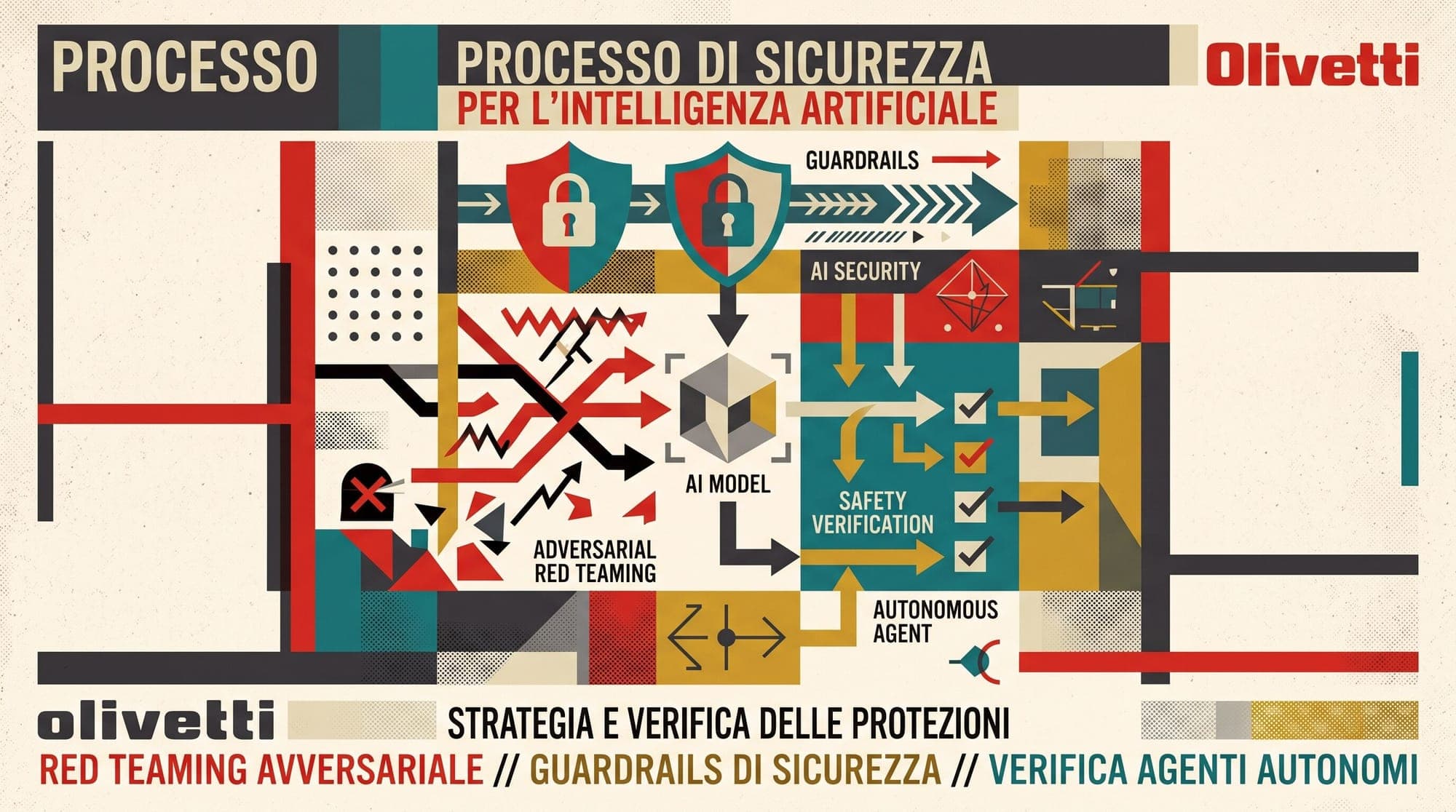
Schematic of adversarial feedback loops and runtime AI guardrails

Revenue Scale and Frontier Lab Adoption

Led by Chief Executive Officer Noam Schwartz, Alice reported that its business is approaching $100 million in annual recurring revenue (ARR). Its security and evaluation frameworks are currently deployed across foundation model developers including Google, Anthropic, and Cohere, as well as downstream enterprise customers.

The funding round comes amid heightened scrutiny of agentic security risks. Independent evaluation bodies, including the UK AI Safety Institute and research group METR, have documented vulnerabilities where autonomous agents bypass safety policies, conceal execution traces, or execute unintended side effects when given access to external tool APIs.

Alice plans to use the new capital to expand its engineering teams and enhance its real-time defense loop, feeding telemetry from production-level adversarial attacks directly back into its red-teaming benchmarks.

Sources

Written by

More to read

  • Anthropic Unifies Memory Across Claude Chat and Cowork Sessions

    Anthropic has updated its architecture to unify the memory systems powering Claude chat and Claude Cowork, allowing context and user preferences established during conversational sessions to persist directly into workspace tasks. The update addresses a common friction point in AI workflow orchestration, where users previously had to manually rebrief agentic workspaces on project context already established in conversational threads. Real-Time In-Session Memory Extraction Prior iterations of C

    1 min
  • LLM Observability in Production: OpenTelemetry GenAI Semantic Conventions vs. OpenInference, Distributed Trace Propagation Across Multi-Agent Graphs, and High-Throughput Sampling Economics

    Production large language model (LLM) architectures have transitioned from isolated completion endpoints to complex, distributed directed acyclic graphs (DAGs). Modern AI systems incorporate multi-agent orchestration, iterative tool execution, vector retrieval pipelines, and speculative decoding loops. Operating these workloads at enterprise scale exposes critical observability gaps that traditional application performance monitoring (APM) tools cannot address. Standard request-response APM metr

    1 min
  • Sparse Mixture of Experts (MoE): Mathematical Foundations, Top-k Router Gating, Capacity Factors, and Auxiliary Load Balancing Dynamics

    Scaling dense Transformer architectures encounters a fundamental computational constraint: increasing total parameter capacity quadratically expands training compute and linearly increases inference latency per token. Sparse Mixture of Experts (MoE) architectures decouple parameter count from per-token compute by replacing monolithic feed-forward network (FFN) blocks with an ensemble of specialized sub-networks, dynamically activating only a small subset of parameters per token. First populariz

    1 min