AI Cloud Provider Lambda in Talks to Raise B at 2B Valuation Ahead of IPO

AI cloud infrastructure provider Lambda Inc. is in negotiations to raise up to $3 billion in a pre-IPO funding round that could value the company at $12 billion or higher, according to people familiar with the discussions reported by Bloomberg. The round represents an eightfold valuation step-up from February 2024, when Lambda secured $320 million in Series C funding at a $1.5 billion valuation. The company's annualized revenue is projected to exceed $1.5 billion in 2026, driven by continuous e

2 min
AI Cloud Provider Lambda in Talks to Raise B at 2B Valuation Ahead of IPO

AI cloud infrastructure provider Lambda Inc. is in negotiations to raise up to $3 billion in a pre-IPO funding round that could value the company at $12 billion or higher, according to people familiar with the discussions reported by Bloomberg.

The round represents an eightfold valuation step-up from February 2024, when Lambda secured $320 million in Series C funding at a $1.5 billion valuation. The company's annualized revenue is projected to exceed $1.5 billion in 2026, driven by continuous enterprise demand for high-density GPU computing clusters.

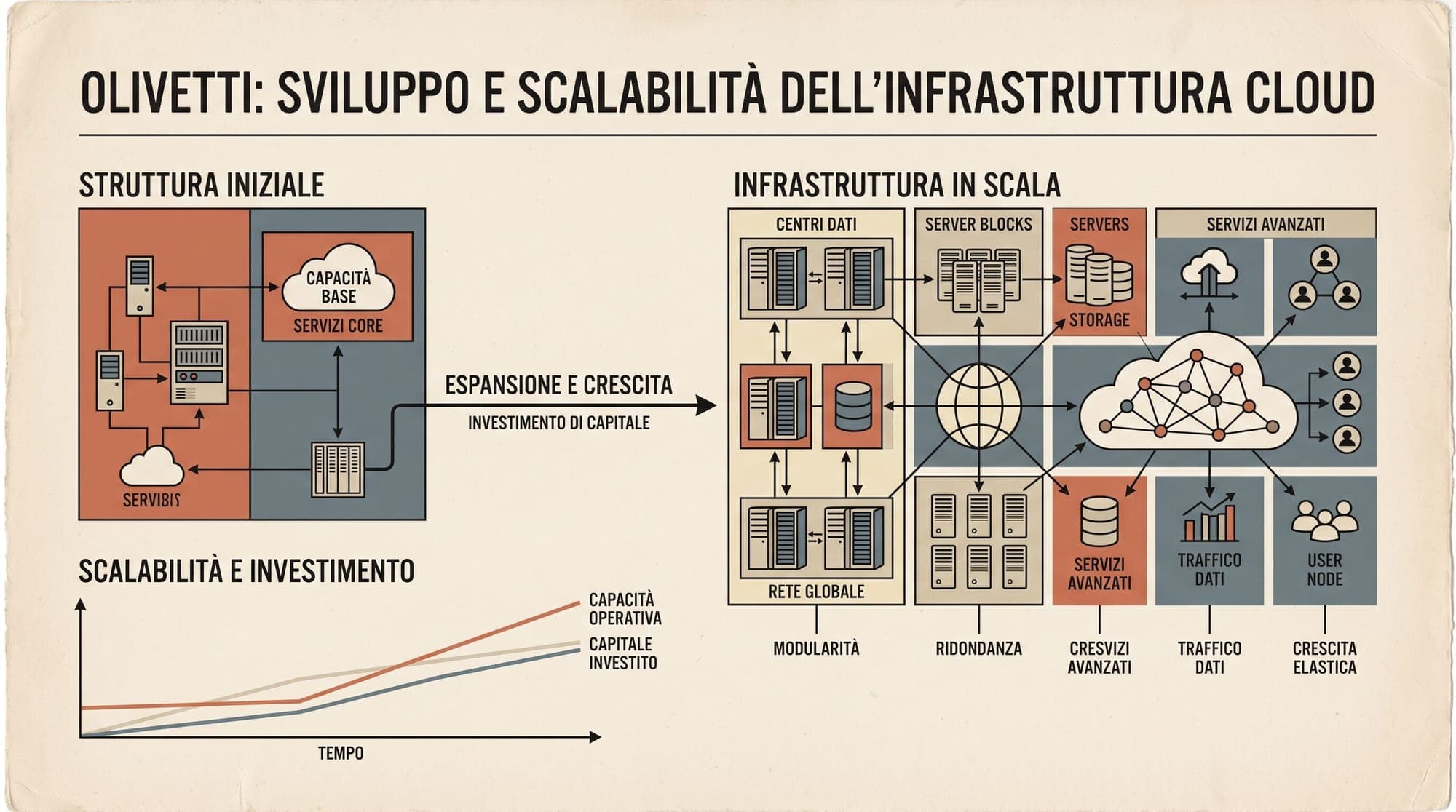
Lambda Cloud Infrastructure Architecture

Capital Acceleration Across the Neocloud Sector

Lambda operates in the emerging neocloud category alongside specialized compute operators such as CoreWeave, Nebius, and Crusoe. These companies rent dedicated GPU clusters, InfiniBand networking, and low-latency storage fabrics to foundation model developers and enterprises seeking alternatives to hyperscalers like AWS, Microsoft Azure, and Google Cloud.

The capital requirements for scaling specialized AI infrastructure have triggered substantial debt and equity operations across the sector. Earlier this month, Lambda arranged a $917 million leveraged loan facility to support a $1.3 billion hardware lease agreement for Nvidia GPUs. The proposed $3 billion equity injection would further strengthen the company's balance sheet ahead of a targeted initial public offering in 2027.

Hardware Commitments and Competitive Dynamics

Backed by Nvidia, Lambda has steadily expanded its fleet of H100, H200, and Blackwell GPU servers across multi-tenant and reserved cloud deployments. The company offers on-demand clusters, colocation space, and bare-metal instances tailored for large-scale distributed training and high-throughput inference workloads.

As frontier AI labs scale parameter counts and context lengths, reliable hardware allocation and power provisioning have become primary bottlenecks. Securing multi-billion-dollar financing rounds enables neocloud providers to commit capital to multi-year data center capacity leases and power interconnect agreements before customer deployments go live.


Sources

Written by

More to read

  • Grammar-Constrained Decoding in Production: Comparing Outlines, llguidance, XGrammar, and LM-Format-Enforcer Architecture, Token Masking Overhead, and JSON Schema Enforcement

    Grammar-Constrained Decoding in Production: Comparing Outlines, llguidance, XGrammar, and LM-Format-Enforcer Architecture, Token Masking Overhead, and JSON Schema Enforcement Deploying Large Language Models into production software workflows requires deterministic adherence to structural formats such as JSON schemas, Pydantic data models, SQL queries, and tool-call signatures. Unconstrained autoregressive generation relies entirely on prompt instructions and few-shot examples, frequently result

    1 min
  • Rotary Position Embeddings: Mathematical Foundations, Complex Rotations, and Long-Context Scaling

    Standard transformer architectures lack an intrinsic mechanism to model sequence order. Because the self-attention operation is permutation-equivariant, shuffling the input token sequence produces an identical permutation in the output representations unless positional signals are explicitly injected. Early architectures addressed this constraint through additive position embeddings, either via fixed sinusoidal functions or learnable absolute position vectors. However, additive absolute encodin

    1 min
  • Thomson Reuters Deploys Thomson-1 Model Built on Open Weights to Cut Frontier Model Dependence

    Thomson Reuters has deployed Thomson-1, a proprietary artificial intelligence model engineered from an open-weight base architecture. The system is designed to execute high-volume legal and domain-specific analytical workflows, reducing the information conglomerate's direct computational dependence on third-party frontier models like Anthropic's Claude. According to financial reporting and recent corporate earnings disclosures, Thomson Reuters invested approximately $40 million into developing

    1 min